The JournalPlacesPuglia
The masserie of the Valle d’Itria
Fortified farmhouses, built to keep the world out, now open their courtyards for the summer. What the walls were for, and what it is like to sleep behind them.
- Words
- Nick
- Region
- Puglia
- Reading time
- 6 min
- Access
- The rest by email
- Published
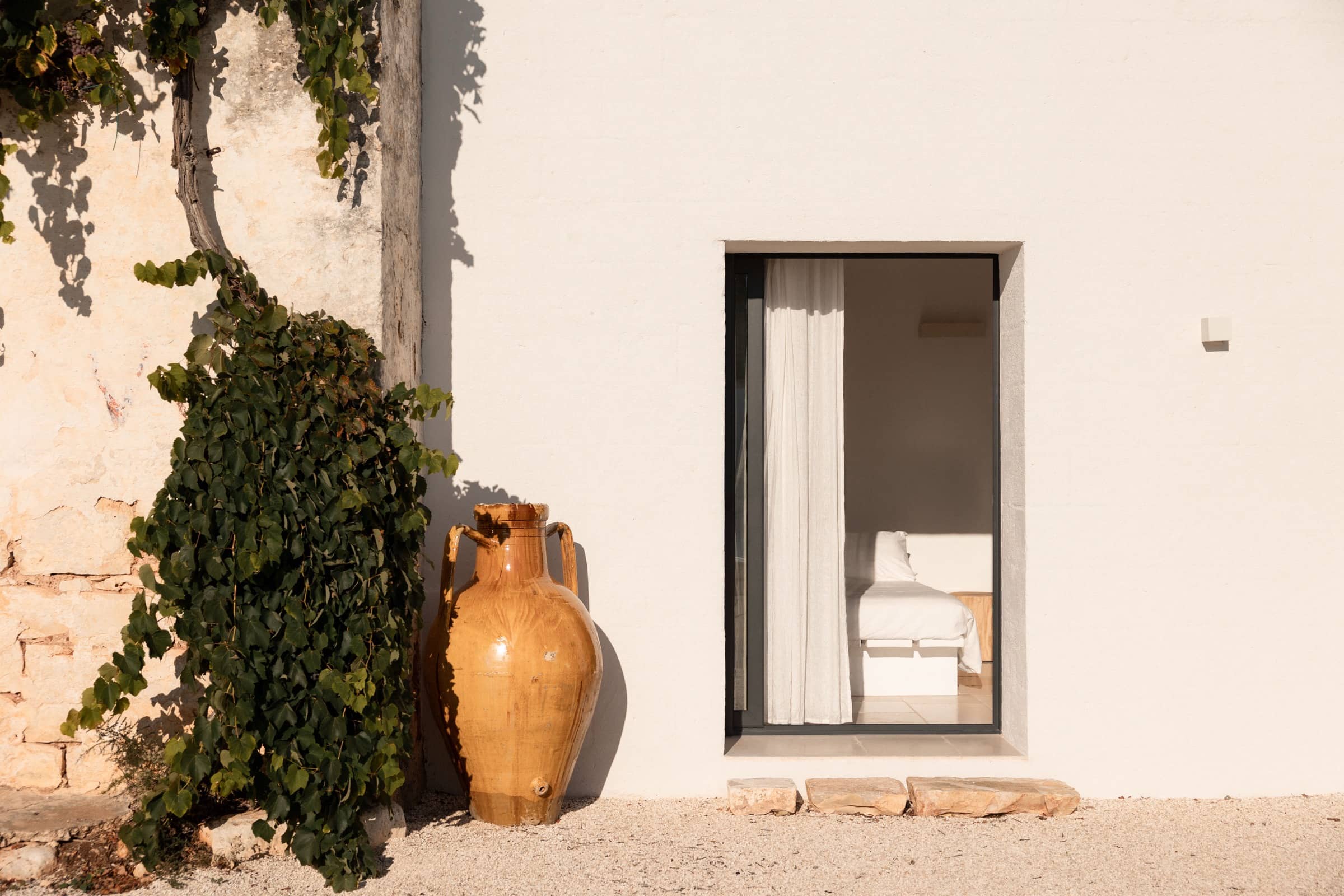
You notice the walls first. They are thicker than they need to be, whitewashed so many times the corners have gone soft, and there is only ever one way in. A masseria was a farm before it was anything else, and a farm on this coast had to be able to close its door.
Drive the lanes between Ostuni, Cisternino and Martina Franca and the pattern repeats: a courtyard, a chapel, a few low buildings for animals and people, dry-stone walls running off into the olives. The ones that survive best are the ones a family never quite left.
A masseria was a farm before it was anything else, and a farm on this coast had to be able to close its door.
Nick
What the walls were for
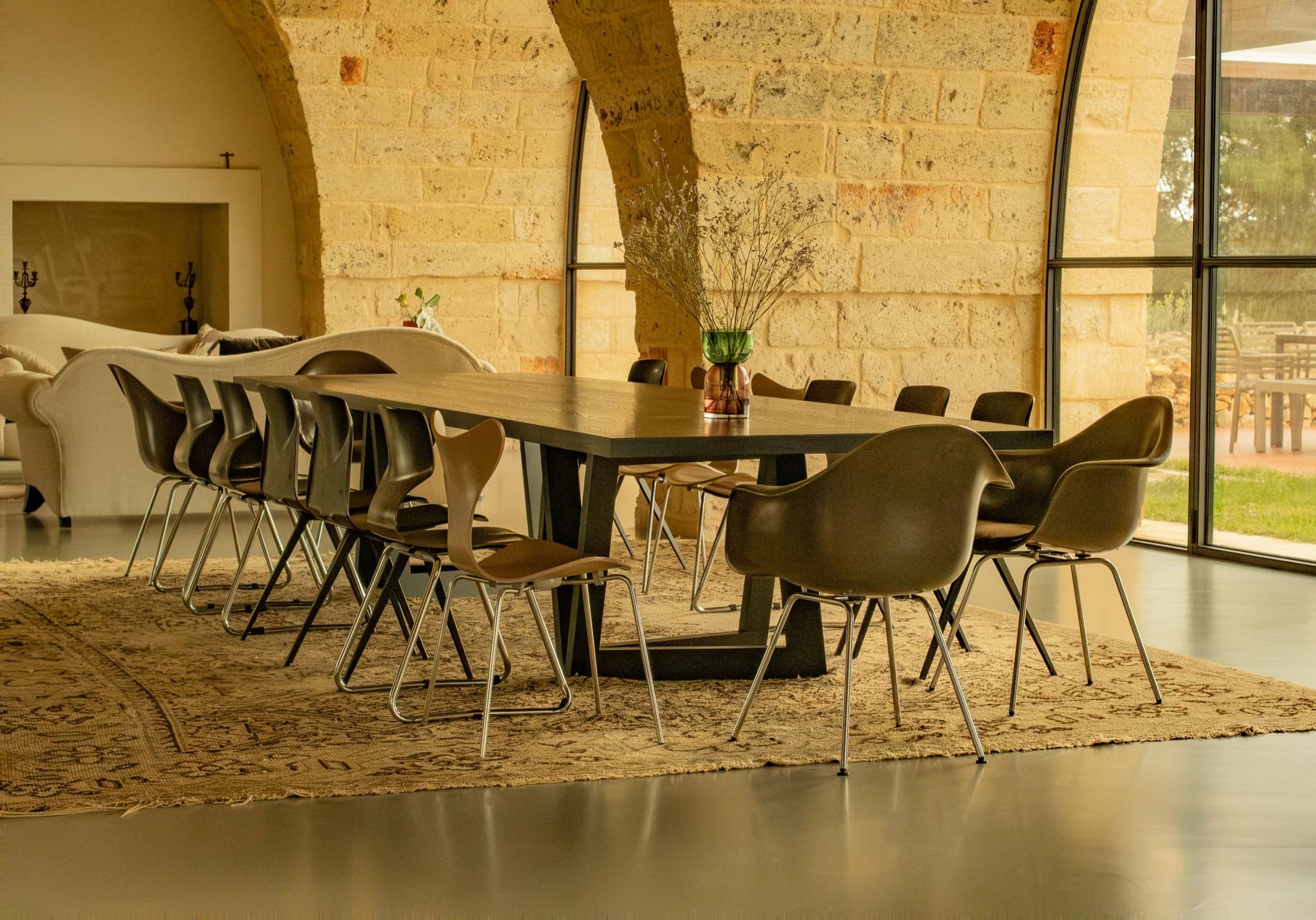
The word comes from massa, the estate, and for most of their history these were working places: a landowner or his tenant in the main house, the hands and the animals in the wings, the harvest in the vaults below. The coast was not a safe place for centuries, and the buildings say so. The outer walls are blank at ground level, the windows sit high and small, and the courtyard turns its back on the road. Some kept a tower; a few kept a loophole or two beside the gate, long since plastered over but still there when the light comes in flat across the wall in the evening.
Inside, the same logic made the rooms. Star vaults and barrel vaults were not a style, they were the way to span a room without timber in a country with few trees to spare. The stone kept the heat out through the day and let it back into the rooms at night, which is why the old kitchens sit where they sit and why the bedrooms are the coolest rooms in the house until October, when the walls, having stored a whole summer, begin to give it back.
The lime, and the olives
The white is lime, not paint. It was put on every spring, partly for the look and partly because lime was thought to keep a house clean, and the habit outlived the reason. Under it the stone is the colour of bread. Where a wall has not been touched for a while the two show together, and the surface has the softness that no new render ever quite gets. If you want to know how long a house has been cared for, look at the corners.
Beyond the walls the olives begin, and in the Valle d'Itria they are old. Many of the trees around the masserie were planted long before the houses were finished, and they set the calendar still: the nets go down in late October, the presses run through November, and the new oil, green and sharp enough to catch the back of the throat, comes to the table before the year is out. The trulli that dot the same fields were the field-hands' houses and the tool stores, one cone to a room, and they belong to the same landscape as the farm, not to a different one.
Sleeping behind them
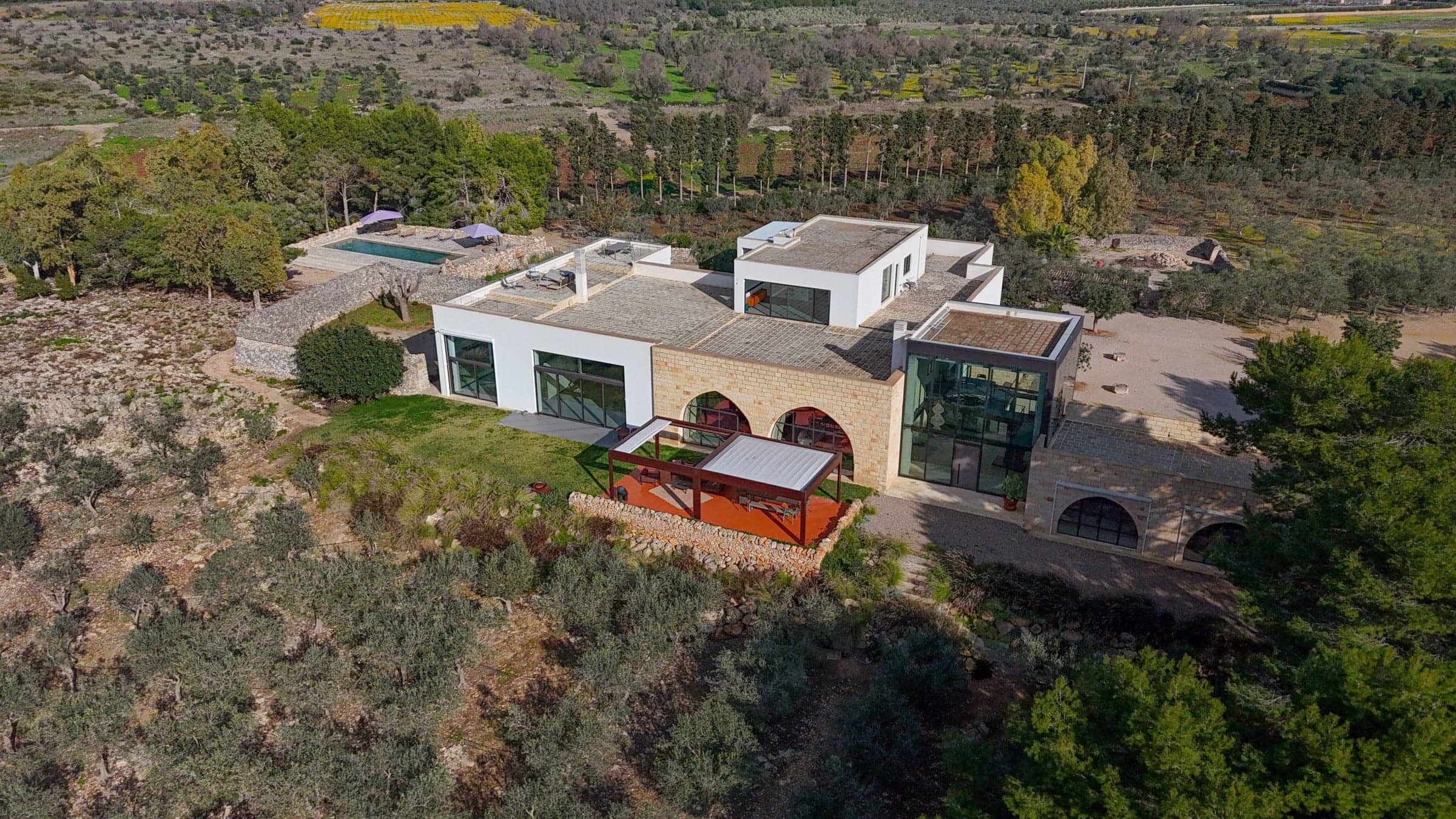
The masserie that take guests now have opened their courtyards, and the change is more than a pool where the threshing floor was. The gate stands open through the day. The chapel is a sitting room or is still a chapel, depending on the family. The vaults have been whitewashed again and the loopholes glazed, and the rooms that housed the animals are the ones people ask for, because they are the ones with the deepest arches.
What has not changed is the silence at night. A masseria sits at the end of its own lane, inside its own walls, among its own trees, and once the gate is shut the sound of the road goes with it. You hear the owls, the dogs two farms over, and not much else. In the morning the light comes over the wall late, because the wall is high, and the courtyard stays in shade until the coffee is finished. It is the one thing a fortified farm was always going to be good at, and it took four hundred years for anyone to sell it.
The houses in the collection that sit inside walls like these are in the Puglia pages, and the one photographed here is among them. Go in October if you can. The pool is still warm, the oil is new, and the walls give the summer back a little every night.
Subscribe to read the rest of this piece.
The short pieces in the Journal are free to read in full; the long ones open here and finish for subscribers. Leave an email address and the rest of “The masserie of the Valle d’Itria” reads on at once, with the newsletter it goes out in. It costs nothing, and you can leave whenever you like.
By subscribing you agree to our Privacy Policy. Your email is handled by our email-marketing provider to deliver the newsletter, and you can unsubscribe at any time.
Three more pieces being written
OwnersSalentoComing soonBy email
The house that stayed in the family
Across Italy, old houses are sold to whoever bids highest. Some owners chose the slower road and restored instead. What that decision means for the people who come to stay.
Words by Anastasia9 min read
RegionsCampaniaComing soon
The Cilento, the coast Campania keeps to itself
South of the Amalfi Coast a national park runs down to the sea, and the villages never learned to hurry. Where to go, when to go, and why so few people do.
Words by Anastasia10 min read
FoodSalentoComing soonBy email
What the market decides
In a Salento kitchen the menu is written at the fish counter that morning, not the night before. A morning spent following it from the stall to the table.
Words by Nick7 min read